
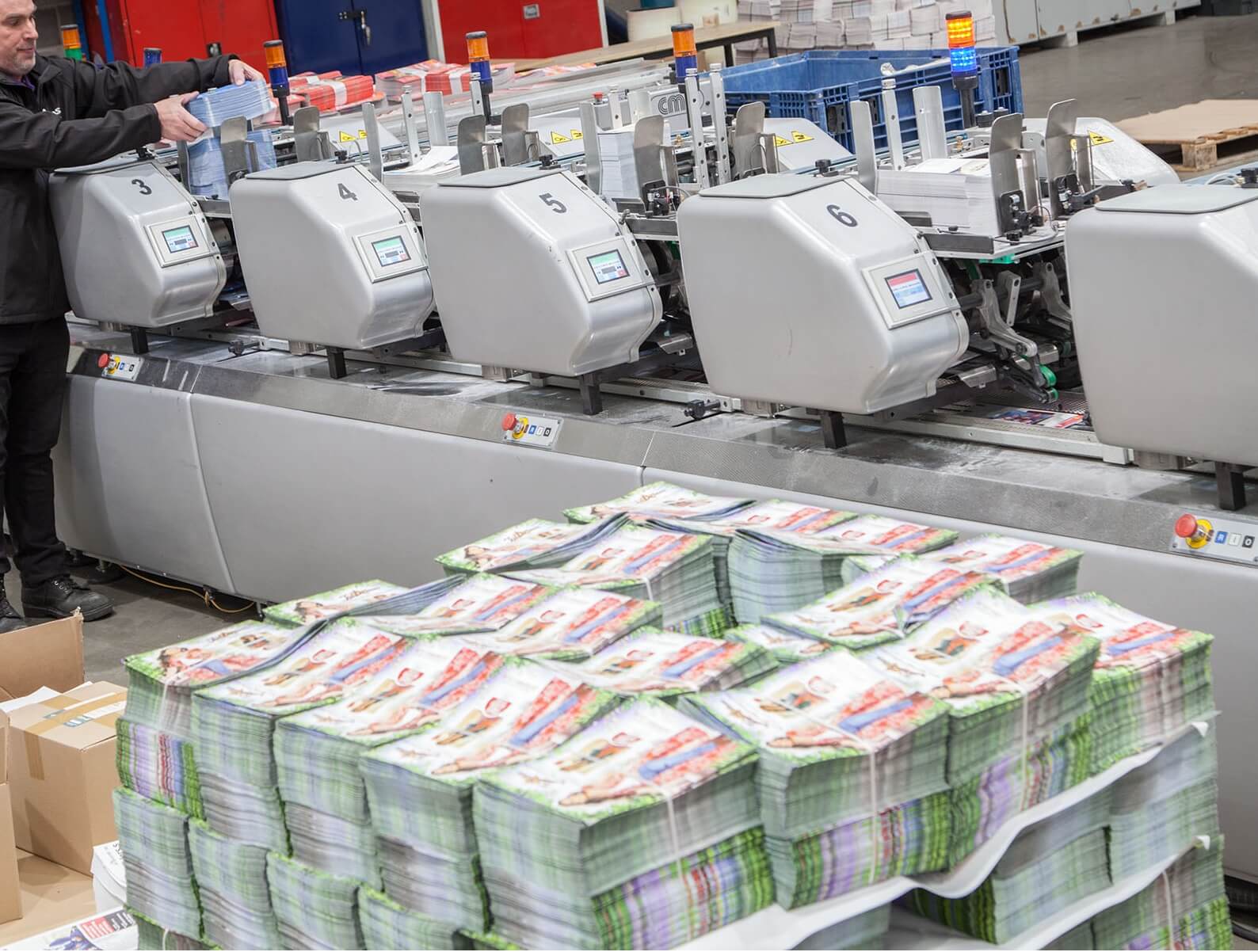
Changing direct mail supplier is not a decision most organisations make lightly.
A mailing partner may handle customer data, time-sensitive communications, important brand materials, and significant postal spend. If the service works, it can quietly support marketing, customer experience and day-to-day operations. If it does not, problems can quickly become visible to customers.
Price will always matter, but choosing a direct mail partner on unit cost alone can overlook the areas that make the biggest difference once a programme is live.
Before appointing or switching supplier, these eight questions can help you assess whether a mailing provider is genuinely equipped to support your organisation.
1. How will you handle and protect our data?
Start with data security, particularly if your communications contain personal, financial, health or account information.
Ask how files are transferred, who can access them, what controls operate within the production environment and what evidence the supplier can provide around information security. Certifications such as ISO 27001 and Cyber Essentials can provide additional reassurance, but they should sit alongside clear operational processes rather than replace them.
You should also understand how long data is retained, how it is removed when no longer required and what audit information is available if you need it.
2. How do you make sure the right item reaches the right person?
Accuracy becomes increasingly important as mailings become more personalised or contain multiple document types.
A provider should be able to explain how documents are matched, verified and tracked through production. Barcode verification, integrity controls and piece-level audit trails can provide valuable assurance for high-volume and sensitive communications.
Do not be afraid to ask what happens when an exception is detected. The response should be clear and process-led.
3. Can you handle our normal volume and our busiest periods?
A supplier may comfortably manage an average weekly requirement but struggle when campaign volumes increase, seasonal peaks arrive or several projects overlap.
Ask about production capacity, contingency planning, operating hours and how work is prioritised during busy periods. If deadlines are commercially important, you need confidence that the supplier has enough headroom to manage peaks without sacrificing quality.
It is also worth understanding whether production depends heavily on one machine, one site or one individual process.
4. How much personalisation can you support?
Personalisation now goes far beyond adding a customer name to a letter.
Modern direct mail can vary messages, imagery, offers, product selections and outer wraps using customer data. If personalisation is part of your strategy, ask how the supplier manages variable data, how many elements can change within a run and how those variations are checked before production.
Even if your current mailings are relatively simple, choosing a partner with stronger personalisation capability gives you room to develop campaigns later without changing supplier again.
5. Which mailing formats can you produce?
Different communications call for different formats. A catalogue campaign, customer letter, magazine subscription, postcard and transactional pack do not have the same production requirements.
A provider with a broader range of capabilities can help you choose the format around the objective rather than forcing the campaign into the equipment they happen to have available.
Ask about traditional envelopes, paper wrap, brochures, catalogues, postcards, enclosing and fulfilment. If sustainability is important to your organisation, discuss recyclable materials, paper sourcing and plastic-free alternatives as part of the same conversation.
6. How will you help us manage postage?
Postage is a major part of the overall cost and operational planning of a mailing programme, so it should not be treated as an afterthought.
A good mailing partner should be able to discuss available postal services, preparation requirements, routing and the options that suit the urgency and format of your communication.
The cheapest service is not automatically the right one. The aim should be to balance cost, delivery requirements and campaign objectives.
7. What does sustainability look like in practice?
Sustainability claims are easy to make. Useful evidence is more specific.
Ask what materials are used, whether plastic can be eliminated, where paper is sourced, what happens to production waste and whether environmental management is independently certified. If your own organisation has environmental or procurement targets, your supplier should be able to provide information that supports those requirements.
It is also worth considering efficiency. Better targeting, cleaner data and more appropriate formats can reduce unnecessary production before materials are even selected.
8. What will day-to-day account management look like?
Technology matters, but so does communication.
Find out who will manage your account, how projects are briefed, when you will receive production updates and what happens when something changes. For ongoing programmes, regular reporting and proactive communication can be just as valuable as the physical production itself.
A strong supplier relationship should make your internal team feel more informed and less burdened, not create another process they have to chase.
Do you need several suppliers, or one integrated partner?
Many mailing programmes involve several stages: data preparation, print, personalisation, enclosing, fulfilment and postage. Each handover creates another point where information, deadlines or accountability can become fragmented.
For some organisations, using specialist suppliers for separate stages will make sense. For others, consolidating more of the process with one experienced mailing partner can simplify workflows and create a clearer view of the whole project.
MAMs provides data, print, personalisation, mailing formats, fulfilment and postage services under one operation, supporting everything from targeted marketing campaigns to high-volume customer communications.
Look beyond the quote
A competitive quote matters, but the real cost of a mailing programme also includes internal time, avoidable errors, wasted print, missed deadlines and poor customer experience.
The right direct mail partner should help reduce those risks while making the process easier to manage. They should understand the purpose of the communication, ask sensible questions about data and format, provide clear production controls and help you make informed decisions about postage and delivery.
Before you switch supplier, look beyond what each provider can print. Consider how they will protect your data, support your team and help the communication perform from the first record in the database to the final item through the letterbox.