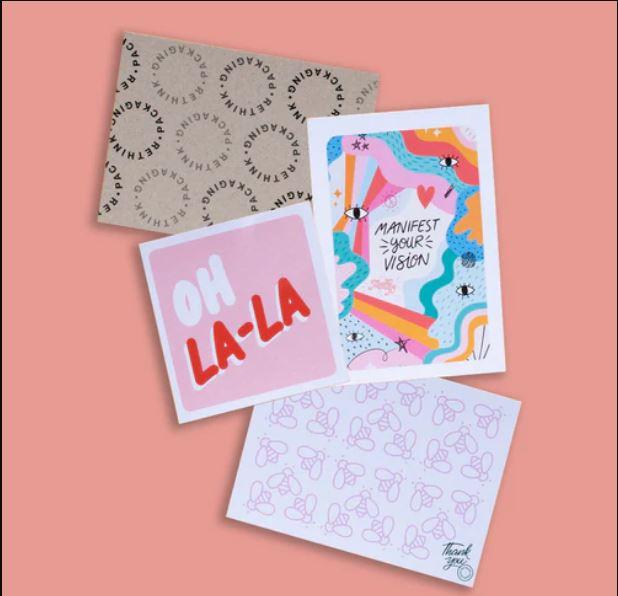

Christmas is one of the busiest periods of the year for marketing.
Consumers are receiving more emails, seeing more social advertising and being presented with more offers than at almost any other point in the calendar.
That makes standing out increasingly important.
Direct mail gives brands the opportunity to create something physical, personal and memorable, but a successful Christmas mailing needs more than a festive design and a December delivery date.
The earlier you start planning, the more opportunity you have to get the data, creative, production and postage right.
Start with the objective
Before deciding what your Christmas mailing should look like, establish what you want it to achieve.
Are you trying to:
- Generate Christmas sales?
- Promote a seasonal offer?
- Encourage previous customers to return?
- Drive people to your website or store?
- Promote a catalogue or product range?
- Thank existing customers?
- Build awareness ahead of the new year?
A campaign designed to generate an immediate purchase will look very different from a customer thank-you mailing.
Having a clear objective from the beginning helps shape everything that follows.
Check your data early
Transactional mail is primarily sent because of an existing relationship, service, account or operational event. The aim is usually to provide information rather than directly Your Christmas creative can be brilliant, but it will only work if it reaches the right people.
Before production begins, take time to review your customer data.
Look for duplicate records, incomplete addresses, outdated information and contacts who may no longer be relevant.
It is also worth thinking about segmentation.
Rather than sending exactly the same message to everyone, could your audience be divided by previous purchases, location, customer type or another useful characteristic?
Better data gives you more opportunities to make your campaign relevant.
Make personalisation part of the creative
Personalisation does not have to stop at adding a customer’s name.
Modern print and mailing technology allows different groups of recipients to receive different messaging, imagery, offers and calls to action.
A previous customer could receive one offer while a prospect receives another.
Customers interested in different product categories could see different imagery.
Even relatively simple variations can make a piece of mail feel more relevant to the person receiving it.
Christmas provides a particularly good opportunity for this because purchasing behaviour can vary significantly between different customer groups.
Choose a format that helps you stand out
Your format is part of your creative.
An envelope might be appropriate for one communication, while a postcard, brochure, catalogue or paper-wrapped mailing could work better for another.
Paper wrap can be particularly effective for highly visual Christmas campaigns because the outer packaging itself becomes additional marketing space.
Instead of waiting for someone to open an envelope, your branding and message can begin working as soon as the mailing lands.
The important thing is choosing the format around the purpose of the campaign rather than simply repeating what you have always done.
Keep the message simple
Christmas campaigns often try to say too much.
New products. Christmas opening hours. Special offers. Delivery deadlines. Gift ideas. January promotions.
Trying to communicate everything at once can weaken the main message.
Decide what you want the recipient to remember and make that the focus.
A strong headline, clear supporting message and obvious call to action will usually be more effective than filling every available space.
Connect physical mail with your digital activity
Direct mail does not need to operate separately from your other marketing channels.
QR codes, personalised URLs, promotional codes and dedicated landing pages can help move recipients from physical mail to an online experience.
This also creates additional opportunities to track response and understand how people are interacting with your campaign.
You might also coordinate your mailing with email, social advertising or other activity so customers encounter a consistent message across multiple channels.
Think about postage before the campaign is finished
Postage should not be the final item on the checklist.
Format, weight, volume and mailing date can all influence the available postage options and overall campaign cost.
Planning this early can help identify opportunities for greater efficiency and reduce the risk of last-minute compromises.
This becomes even more important during the busy Christmas period when campaign timings can be less flexible.
Give yourself enough production time
Christmas deadlines have a habit of arriving quickly.
Creative approval, data processing, printing, personalisation, fulfilment and postage all need to happen before your communication reaches the recipient.
Building contingency into the schedule gives everyone involved more room to deal with unexpected changes without putting the delivery date at risk.
If Christmas is important to your business, avoid treating your mailing as a last-minute campaign.
Make your Christmas mail work harder
A successful Christmas direct mail campaign brings several elements together.
The right audience.
Relevant data.
Strong creative.
An appropriate format.
Effective personalisation.
Efficient production and postage.
At MAMs, we support businesses throughout the mailing process, including data, print, personalisation, paper wrap, fulfilment and postage.
If you are planning a Christmas campaign, getting the process started early can give you more options and help ensure your mailing reaches customers at the right time.
Planning your Christmas mailing? Speak to the MAMs team about turning your campaign into something customers will remember.